| ABS (acrylonitrile butadiene styrene) |
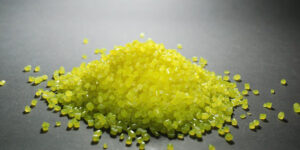
Thermoplastic copolymer obtained by polymerization of acrylonitrile, styrene, butadiene.
|
|
Back pressure
|
Pressure that is applied to the rear end of the screw and causes it to slow down its backward movement as molten material accumulates in the injection chamber due to the rotation of the screw.
|
|
Cylinder
|
Part of the injection unit, heated externally by electric heating elements, in which the plastic material is plasticized and then, under the action of high pressure, injected by means of the screw at high speed into a thermally controlled mold.
|
|
Black dot
|
Specific type of inclusion/contamination often associated with material degradation (size: 0.10 mm2 or smaller).
|
|
Bubble
|
Defect consisting of the formation of air or gas bubbles in the part.
|
|
Coinjection
|
Sequential injection of two components, one for the liner and one for the core.
|
|
Cold channels
|
System of successively subdivided conduits that carry molten material to mold cavities, into which the material itself enters through an orifice (injection point).
|
|
Cycle time
|
Time required to complete a molding cycle. It is given by the sum of the duration of the following phases: mold closing, injection, cooling and mold opening.
|
|
Diaphragm injection
|
Injection type used for molding cylindrical parts with small or medium inner diameter.
|
|
Drying
|
Treatment necessary to remove moisture contained in the material to be printed, the source of defects in printed parts. All hygroscopic materials must be dried.
|
|
Technopolymer
|
A plastic material that possesses physical and mechanical properties suitable for structural applications in prolonged use over a wide temperature range and/or under mechanical stress and/or in an aggressive chemical environment.
|
|
Filling phase
|
Step in the molding process in which molten material is injected into the mold.
|
|
Flame retardants
|
Additives used to decrease the flammability of plastic materials.
|
|
Burr
|
Thin appendage that tends to form on the molded part at the mold closure plane.
|
|
Gas-assisted injection molding
|
A procedure that, through gas injection, allows thick sections to be relieved by forming cavities within them and compensating for material shrinkage.
|
|
Injection point
|
Orifice located at the end of the injection channels through which the molten material is introduced into the mold cavity.
|
|
Glass fibers
|
Family of reinforcement materials for reinforced plastics consisting of single glass filaments.
|
|
Hot channels
|
System of successively subdivided heated conduits that carry molten material to mold cavities, into which the material itself enters through an orifice (injection point).
|
|
Injection molding
|
Plastics processing technique for the production of finished products. Molten polymer is fed into a mold of which, by compression and cooling, it takes the shape.
|
|
Mineral fillers
|
Natural substances added to the polymer to improve its mechanical strength or electrical properties.
|
|
Mold
|
Model by which objects of the desired shape are obtained in the molding of plastics.
|
|
Multicolor molding
|
A technique for making parts composed of multiple polymers of different colors. After injection of the first material, the mold is automatically reconfigured to allow injection of a second polymer of a different color in specific areas.
|
|
Multi-component molding
|
A technique for making parts that incorporate details of a different material than the frame material (e.g., toothbrushes coated with a soft non-slip layer). |
|
Overmolding
|
A process for producing items that contain a rigid core (plastic or metal) inside them, which is inserted into the mold before the plastic material is injected. |
| PMMA | Thermoplastic polymer obtained by polymerization of a methacrylic acid derivative. |
| PA | Thermoplastic polymer obtained by the reaction between diamines and bibasic acids or between lactams and amino acids. |
| PET |
Thermoplastic polymer obtained by condensation of terephthalic acid with ethylene glycol.
|
| PC | Thermoplastic polymer obtained by reaction of bisphenol and phosgene. |
| PE | Thermoplastic polymer obtained by polymerization of ethylene. By differentiating the polymerization process, one can obtain: LDPE (low-density PE), LLDPE (linear low-density PE) and HDPE (high-density PE). |
| PS | Thermoplastic polymer obtained by polymerization of styrene. |
| Underwater injection. | Injection point located below the mold parting plane. |
| Thermoplastic | Plastic material that by heating softens even after the formation of the object obtained in the transformation; therefore, its recovery by melting is possible. |
| PP | Thermoplastic polymer obtained by polymerization of propylene. |
|
Injection molding machine
|
A machine for generating pressure and using it to press against each other the two halves of the mold inside which molten plastic material is injected.
|